

Fatih
One day in Sultanahmet without the scatter
Hagia Sophia, Blue Mosque, Basilica Cistern, and Topkapı in walking order — with one rule that keeps the day from collapsing.
SultanahmetOne DayItinerary
Read guide41 places · narrow by district and visit style
Quick filters
An early 17th-century imperial mosque famous for its Iznik tile interior. It's still an active place of worship, so visits are scheduled around prayer times.

Gülhane Park is Istanbul's oldest public park, sprawling on the grounds of Topkapı Palace. It's a green escape with palace walls, sea views, and plenty of shade.

This is the city's main spice market, a covered arcade in Eminönü filled with stalls selling everything from saffron to lokum. It's smaller and more focused than the Grand Bazaar, with a strong scent of herbs and tea in the air.

Süleymaniye Mosque, designed by Mimar Sinan for Suleiman the Magnificent, is a masterpiece of Ottoman architecture. Its hilltop location offers one of the best views of the Golden Horn.

A vast, atmospheric 6th-century underground cistern built by Emperor Justinian. Walk on raised platforms above shallow water, surrounded by a forest of columns.

Early 16th-century Ottoman imperial mosque on Beyazıt Square, beside the Grand Bazaar. A calm courtyard with old plane trees offers a break from the nearby market.

A historic square in Fatih dominated by the Bayezid II Mosque and the grand entrance to Istanbul University. The Sahaflar book bazaar sits right next to it.

Bodrum Mosque, originally the 10th-century Myrelaion Church, sits south of Laleli. A Byzantine-era structure still used as an active mosque.

A crumbling Byzantine palace facade right on the Marmara shore, south of the Hippodrome. You can walk right up to its seaward marble balcony and lion reliefs.

A Bulgarian Orthodox church built entirely from prefabricated cast iron, located in Balat. Its Neo-Byzantine style is a striking piece of late 19th-century architecture.

Çemberlitaş Hamamı is a 1584 Turkish bath beside the historic Divan Yolu, attributed to architect Mimar Sinan.

Erected in 328 AD to mark the founding of Constantinople, this is the oldest surviving monument from Constantine the Great's era.

The spiritual center of the Eastern Orthodox Church, located in the historic Fener neighborhood. It's the seat of the Ecumenical Patriarch, considered 'first among equals' in Orthodox Christianity.

Eminönü's waterfront is the restless meeting point of ferries, fish-bread boats, and the old spice market under the Galata Bridge, with Yeni Cami's pigeon-filled square.

Ottoman mosque built on the site of the Church of the Holy Apostles, rebuilt after the 1766 earthquake.

Two Byzantine churches joined into a single mosque in Fatih, still showing their age-old brickwork.

A historic Greek quarter on the Golden Horn, named after a Byzantine column lantern that once served as a lighthouse. Steep lanes lead past Greek Orthodox churches and old wooden houses.

A quiet former Byzantine church turned mosque near the Golden Horn, often overlooked by the crowds. Simple, peaceful, and free to enter outside prayer times.

Founded by Mehmed II in 1453, just after the conquest, this public research university’s historic campus sits steps from the Grand Bazaar. Its gate and courtyard remain open to visitors.

A Byzantine church converted to a mosque, famous for its intricate Late Byzantine mosaics and frescos. It's in the Edirnekapı neighborhood.

18th-century Ottoman baroque mosque on Ordu Caddesi, a quiet imperial stop between Beyazıt and Aksaray.

Originally a 6th-century Byzantine church dedicated to Saints Sergius and Bacchus, this building was later converted into a mosque. It's a quieter, smaller-scale architectural sibling to the grand Hagia Sophia.

A 16th-century Ottoman mosque by Mimar Sinan, sited on the city's highest hill near the Byzantine walls. Its light-filled interior makes it a striking landmark.

An Ottoman imperial mosque on the Golden Horn, marking the passage from the historic peninsula to Beyoğlu. Completed in the 1660s, it reflects the power of the Sultanate of Women.

An 18th-century Ottoman mosque just outside the Grand Bazaar, on Turkey's tentative UNESCO list since 2016.

A former Byzantine church turned mosque, with a small museum chapel holding some of Istanbul's finest surviving mosaics after Hagia Sophia and Chora.

A Mimar Sinan-designed mosque tucked above the Spice Bazaar, famous for its incredible collection of Iznik tiles. It's a small, peaceful space that feels like a hidden treasure chest.

Sinan's first imperial commission, built as a memorial for Suleiman's son. A fine example of Classical Ottoman architecture, much quieter than Süleymaniye.

A 16th-century mosque by Mimar Sinan with a stunning interior covered in İznik tiles and containing fragments of the Kaaba stone. Tucked away in Kadırga, it’s quieter than the big-name sights.

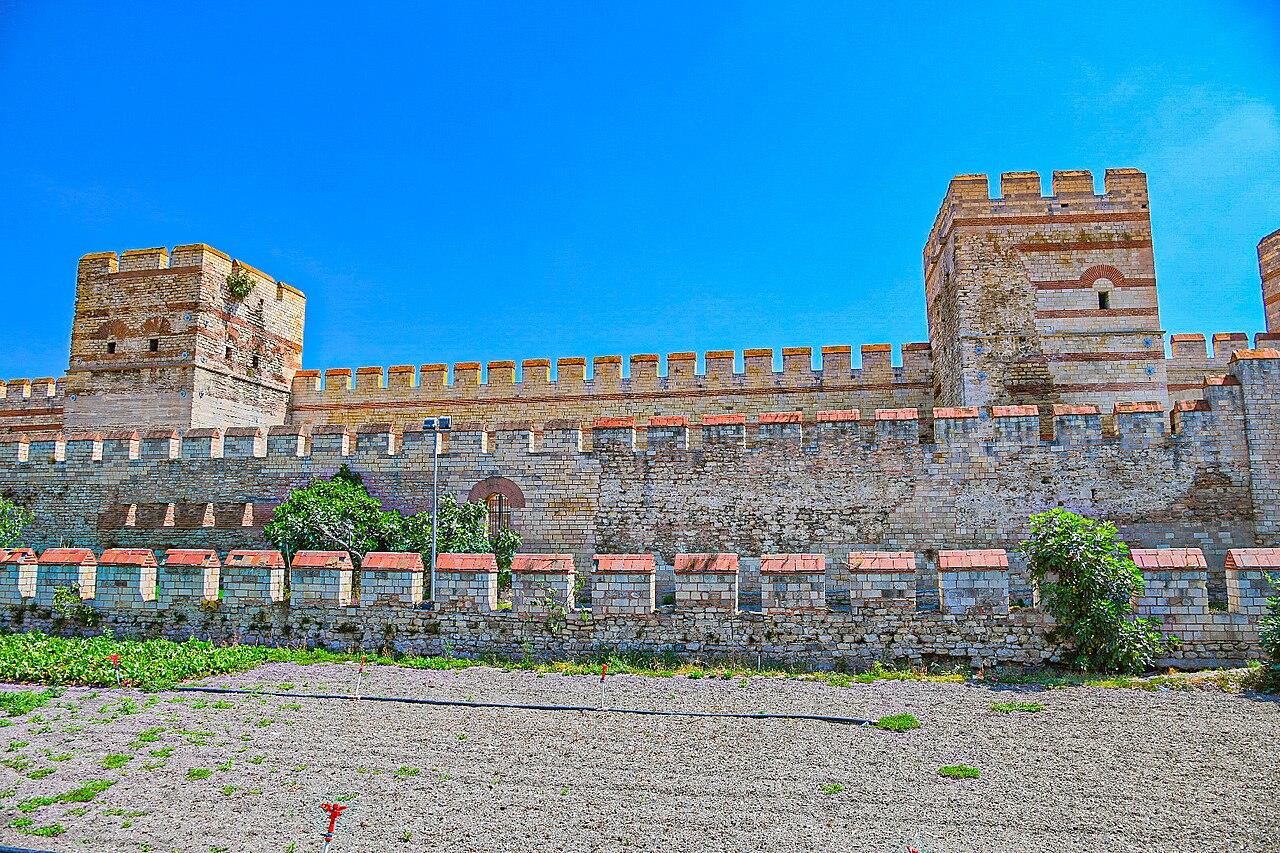
These are the massive stone walls that protected Constantinople for centuries. You can walk along sections of them, especially around the Edirnekapı and Topkapı areas, to get a sense of the city's ancient scale.
A quiet medrese museum steps from the Grand Bazaar, devoted to Ottoman calligraphy, Korans, and imperial tughras. Easy to miss and easy to like.

This Roman aqueduct from the 4th century supplied water to Constantinople for over a thousand years. It cuts right through the modern city, so you can walk right up to it.

Zeyrek Mosque combines two Byzantine churches and a chapel into one structure. It's the second-largest surviving Byzantine religious building in Istanbul after Hagia Sophia.

Built around 1430, Ahrida is one of Istanbul's oldest synagogues, tucked into the historic Jewish quarter of Balat.

Finished in 1741, this historic Ottoman bath was among the last built in Constantinople. It was constructed to fund the library of Sultan Mahmud I in Ayasofya.

In the Arasta Bazaar, this museum exhibits Byzantine floor mosaics from the Great Palace. You'll see hunting scenes, animals and mythical figures preserved in remarkable detail.

A 16th-century Turkish bath designed by the famed architect Mimar Sinan for Hürrem Sultan, wife of Suleiman the Magnificent. It's a historic building located between the Hagia Sophia and the Blue Mosque.

Replicas of scientific instruments from the 9th to 16th centuries, displayed in the old Imperial Stables of Gülhane Park. Most pieces are reconstructions based on historical texts, with very few originals.

A massive 360-degree painting that immerses you in the sounds and sights of the 1453 conquest of Constantinople. The dome-shaped hall makes you feel like you're standing inside the battle.

Journal
Hagia Sophia, Blue Mosque, Basilica Cistern, and Topkapı in walking order — with one rule that keeps the day from collapsing.
Affiliate links — we earn a commission when you book; it costs you nothing extra.