
Blue Mosque
An early 17th-century imperial mosque famous for its Iznik tile interior. It's still an active place of worship, so visits are scheduled around prayer times.
The Sultan Ahmed Mosque was built between 1609 and 1617. It's a working mosque, not just a museum, so you'll see people praying while you visit. The main hall is covered in thousands of blue Iznik tiles, which is how it got its popular name. The courtyard is massive and gives you a good sense of the scale before you step inside. Remember to dress modestly—they provide cover-ups if needed, but it's easier to come prepared. It sits right across from Hagia Sophia, so it's easy to see both in one trip.
“To see the famous blue-tiled interior of a still-active imperial mosque.”
The tourist entrance is on the southwest side (near the Hippodrome); the main worshipper entrance is on the northwest side facing Hagia Sophia.
Blue Mosque Guided Visit
Entry guidance + context on the tile work. Works around prayer times.
Main courtyard and prayer hall are step-free via ramps, but removing shoes is required to enter the carpeted interior.
Good to know
- Is Blue Mosque free to visit?
- Free. Free; closed to tourists during 5 daily prayers
- How long should you spend at Blue Mosque?
- ~1h
- When is the best time to visit Blue Mosque?
- Morning
- Is there a dress code at Blue Mosque?
- Headscarf required. Bring a headscarf to be safe — free coverings are usually available at the entrance. Closed to tourists during the 5 daily prayers.
- Is Blue Mosque wheelchair accessible?
- Main courtyard and prayer hall are step-free via ramps, but removing shoes is required to enter the carpeted interior.
Nearby places
Open the district guide

Related guide
Open journal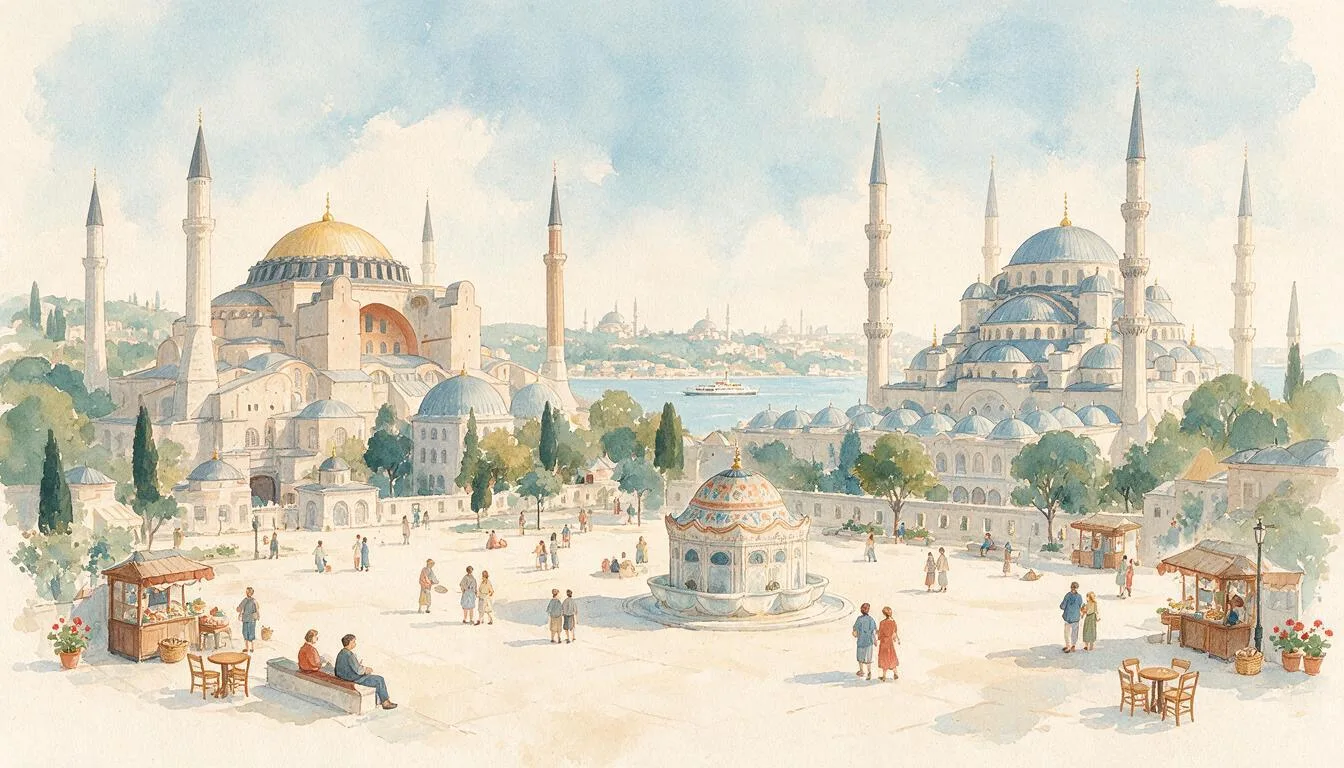
One day in Sultanahmet without the scatter
Hagia Sophia, Blue Mosque, Basilica Cistern, and Topkapı in walking order — with one rule that keeps the day from collapsing.