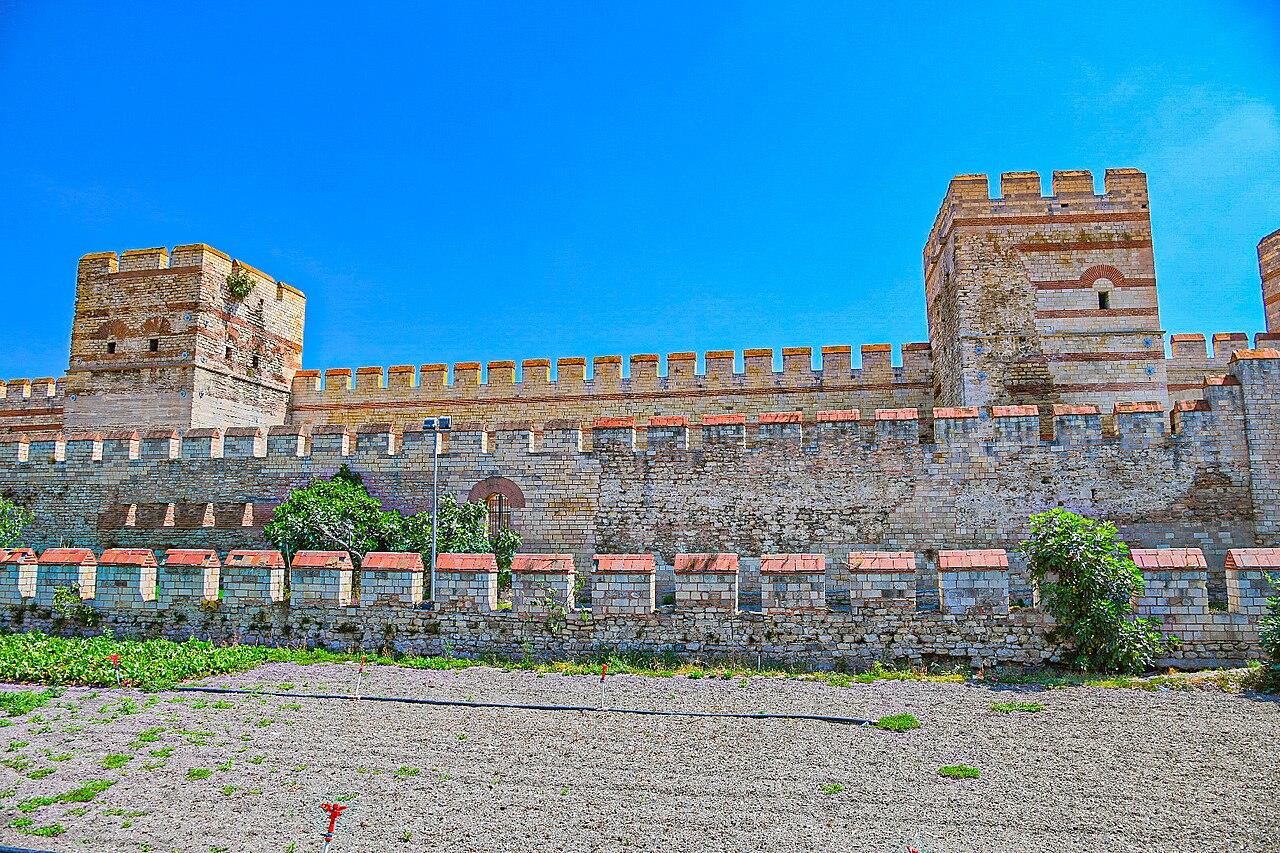
Theodosian Walls
These are the massive stone walls that protected Constantinople for centuries. You can walk along sections of them, especially around the Edirnekapı and Topkapı areas, to get a sense of the city's ancient scale.
“To walk alongside the physical barrier that defined a capital for a thousand years.”
See the exact spot on the map at right. The highlighted pin clearly marks this stop.
Built as the last great fortification system of antiquity, the Theodosian Walls are a complex series of defensive stone walls that surrounded and protected Constantinople. They represent the formidable engineering of the late Roman Empire and were modified many times throughout history.
Today, long stretches are still standing, particularly in the Fatih district. Walking alongside them, you can see the remains of towers, gates, and the deep moat. It's a completely different perspective on the city, away from the main tourist centers, and gives you a tangible feel for its ancient boundaries.
The section near the Chora Museum (Kariye) is one of the best-preserved and easiest to access, with clear paths.
The ground is uneven, grassy, or rocky with no paved paths along most sections. Not suitable for wheelchairs or strollers.
Keep going in Fatih
A few places that pair well with this stop on the same day.
Yedikule Fortress
A massive Byzantine and Ottoman fortress with thick walls and towers. It's a sprawling, atmospheric ruin where you can walk the ramparts and see the old Golden Gate.

Valens Aqueduct
This Roman aqueduct from the 4th century supplied water to Constantinople for over a thousand years. It cuts right through the modern city, so you can walk right up to it.


